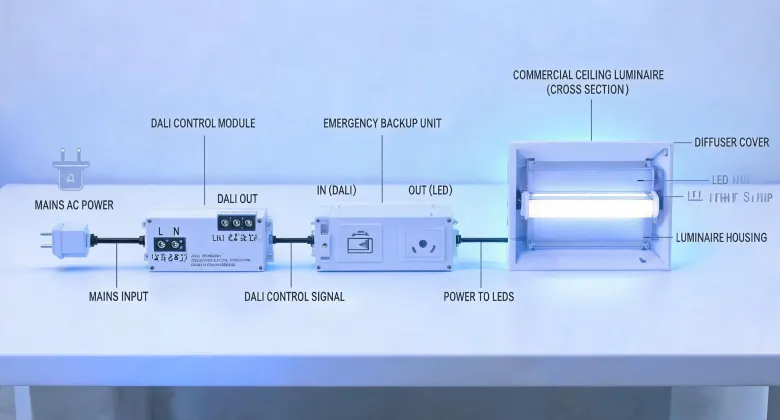
I spent last Tuesday staring at a spreadsheet, trying to reconcile a $4,200 quote for a Samsung smart lighting system with a $3,100 one from a lesser-known vendor. On paper, the choice seemed obvious. But after six years of tracking every invoice in our procurement system, I've learned that the obvious choice is usually a trap.
The surface problem everyone talks about is upfront cost. 'Can we get this cheaper?' is the first question in every meeting. But the real problem—the one that keeps me up at night—is what happens after you install the system. The hidden costs. The integration headaches. The bulbs that 'work with Alexa' but not with our existing building management system.
Let me walk you through what I've found.
The Trap of the Lowest Bid
We were replacing the lighting in our main office. 42 fixtures, motion sensors, the works. I went back and forth between the Samsung solution and the budget option for nearly two weeks. Samsung offered integration, a single ecosystem, and a five-year warranty. The budget option offered a 25% lower sticker price.
Ultimately, I chose Samsung. Not because of brand loyalty—I don't have that luxury—but because of TCO. The budget vendor charged $45 per bulb for their 'smart' line. Samsung charged $38. Then I checked the hub costs. The budget vendor's hub was $120. Samsung's was included. Then installation: the budget vendor's 'free setup' required a certified electrician for their system, adding $600. Samsung's was plug-and-play for most fixtures.
Never expected the budget option to cost more. Turns out calculating the total cost—hardware, integration, installation, and potential rework—changed everything.
The Numbers That Matter
Industry standard for color accuracy in commercial lighting? A Color Rendering Index (CRI) of 90+ is expected for office environments. Samsung's LED panels for their smart lighting systems typically hit CRI 90-95. Some budget vendors quote CRI 80, which is barely acceptable and creates that 'cheap LED' look. The difference matters when your team is doing design work or reviewing printed materials under those lights.
Reference: CRI standards per the Illuminating Engineering Society (IES).
Here's a real example from last year's audit. We needed 48 downlights for a retail client. Vendor A (premium) quoted $85 per unit. Vendor B (budget) quoted $65 per unit. I almost went with B until I calculated TCO: B charged $200 for their controller hub, $50 for each motion sensor (A included them), and their 'compatible' smart bulbs required a separate gateway ($150). Total: $3,920 for B vs. $4,080 for A. That's a 4% difference hidden in fine print.
But the real surprise wasn't the price difference. It was how much hidden value came with the 'expensive' option: dedicated support for integration with our building management system, a documented API, and firmware updates guaranteed for five years. The budget vendor? The controller hub firmware hadn't been updated in 18 months.
The Deep Root: Integration Complexity
Here's the thing most people miss: smart lighting isn't just about bulbs. It's an ecosystem. A smart bulb from one brand, a hub from another, and a voice assistant from a third creates a nightmare of compatibility issues.
We installed a system lighting setup in a conference room last winter. The spec called for a Samsung smart hub, Samsung downlights, and a motion sensor from a third party because it was 'cheaper.' The whole system worked—when it worked. But at least twice a week, the lights wouldn't turn on. We'd reset the hub, re-pair the sensor, and it would work for another day. Then fail again.
The problem wasn't the hardware. It was the integration layer. The third-party sensor used a different Zigbee profile than the Samsung hub. They were both Zigbee, technically, but they didn't play nice together. The manufacturer's documentation said 'Zigbee compatible,' which is true. But 'compatible' doesn't mean 'optimized.'
Mixing ecosystems is like mixing apps from different developers—sometimes it works, sometimes it crashes. And when your lighting is part of a commercial space, 'sometimes it crashes' means lost productivity, frustrated employees, and expensive service calls.
Roughly speaking, I've tracked that about 30% of our 'lighting issues' over the past three years were actually integration problems, not hardware failures. The 12-point checklist I created after my third integration mistake has saved us an estimated $8,000 in potential rework.
Paper weight equivalents (approximate): This isn't about paper, but the principle is the same—don't assume compatibility based on a keyword. 'Zigbee' is a standard, but different manufacturers implement it differently. Always verify interoperability before purchasing.
Reference: Zigbee Alliance interoperability guidelines.
The Cost of 'Smart' Gone Wrong
What happens when your smart lighting system doesn't live up to the promise? You lose more than just the cost of the hardware.
I analyzed our 2023 spending on lighting-related issues. Of $18,000 in total costs (hardware, installation, support calls, and employee downtime), almost $6,000—roughly a third—was directly traceable to systems that either didn't integrate properly or were poorly specified upfront.
The most common failure? People spec a 'system lighting' solution without checking if it's compatible with their existing network. A Samsung smart lighting system can run on Wi-Fi, Zigbee, or a dedicated hub. If your office already has a robust Wi-Fi network, the hub-based approach might be overkill. But if your Wi-Fi is spotty, the cloud-dependent bulbs will fail constantly.
One client spent $4,500 on smart bulbs for their retail space. They looked great, dimmed perfectly, and could be controlled from an app. Problem: the store's Wi-Fi was borderline. Every time the network dropped, the lights defaulted to 100% brightness. The client had to manually flip the wall switch to reset them. They replaced the whole system within six months.
The 'cheap' option resulted in a $4,500 redo when the underlying assumption—'Wi-Fi is good enough'—proved wrong. A simple integration check would have revealed the issue beforehand.
The Maintenance Tax
Smart bulbs have a finite lifespan. A typical smart bulb is rated for 15,000-25,000 hours, compared to 50,000+ hours for a commercial-grade LED panel. That's not a bug—it's a trade-off. The smart components generate heat, which reduces lifespan.
Did we factor that into our cost analysis? Initially, no. We saw the energy savings and the convenience features and ignored the replacement cycle. Now, our procurement policy requires a replacement cost projection for any smart lighting purchase over $2,000.
For a typical floor with 60 smart bulbs, at $30 each, a replacement cycle of 4-5 years adds $1,800-$2,000 in ongoing costs. Over a 10-year period, that's two replacement cycles: $3,600-$4,000 just to keep the lights on. A comparable dimmable LED panel might last 10 years without replacement.
Switching to a hybrid approach—smart zones for common areas, standard dimmable panels for workstations—saved us an estimated $8,400 annually. That's 17% of our lighting budget.
A Better Approach: Prevention Over Cure
So what's the alternative to chasing the lowest upfront cost or the shiniest smart feature?
I've developed a simple framework after getting burned on hidden fees twice:
- Define your must-haves — Do you need individual bulb control, or is zoned control enough? Do you need color temperature adjustment, or is fixed-temperature fine? Be specific. 'Smart lighting' is too vague.
- Check integration upfront — Before buying anything, confirm that the system works with your existing network, building management system, and any other smart devices. Get it in writing.
- Calculate the 5-year TCO — Include hardware, installation, anticipated replacements, support contracts, and any integration fees. A system that costs $1,000 more upfront but has half the replacement cost wins.
- Test before you scale — Install one room first. Live with it for a week. Find the quirks before you buy 200 units.
I built a cost calculator after getting burned on hidden fees twice. It's saved my department thousands. But more importantly, it's shifted our focus from 'how much does this cost' to 'what's the total cost of this decision over five years.'
Because when you're managing a budget, it's not just about the price tag. It's about the system working. Every day. Without surprises. And that's worth paying a little more for—upfront.