Admitting "We're Not the Right Vendor" Is Our Best Sales Move
When I was 27, I nearly blew up a $320,000 order because I told a client "yes, we can handle the Zigbee integration" without knowing how Zigbee actually works. That mistake cost us $12,000 in overtime labor plus a 6-week delay. I work at samsung-led, and I've made 14 documented mistakes since I started handling orders in 2019—totaling roughly $38,000 in wasted budget. Now I maintain our team's pre-order checklist. If you ask me, a supplier who claims to do everything is either delusional or lying. This is why.
The mistake that changed my approach
When I first started managing commercial lighting orders, I assumed that "one-stop shop" was what clients really wanted. Looking back, I was confusing convenience with capability. We had a great catalog—Samsung LED downlights, spotlights, even grow lights for vertical farms—so why not also offer the smart controls? The thinking was: "If we don't provide it, they'll buy it from someone else."
I went back and forth for two weeks before the hotel project quote was due. Saying yes meant a $320,000 order; saying no meant possibly losing it. The easy sales move was obvious: say yes. My gut said we'd drown. I ignored it.
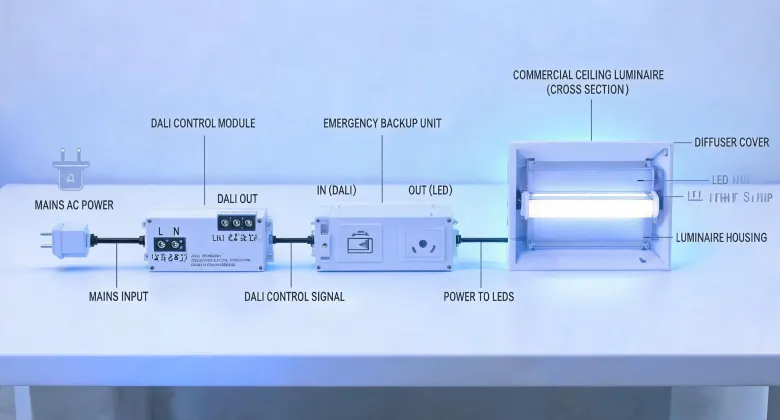
In September 2022, we signed the deal. The client wanted 120 home chandeliers, a bunch of spotlight bars for the lobby bar, and a Samsung LED 60 inch TV in each suite. They also asked, "Can you integrate the lighting with a Zigbee scene controller?" I said, "Of course." What followed was a nightmare of unmatched devices, dropped signals, and a very angry electrician. We eventually had to bring in a third-party Zigbee specialist, who charged us $4,500 just to untangle the mess. The client was forgiving, but our margin was gone and our reputation took a hit. (Honestly, the fact that they didn't sue us still surprises me.)
In hindsight, I should have watched a three-minute video on how Zigbee works. But even that wouldn't have made me an expert. Real expertise is knowing the mesh routing, device compatibility, and commissioning quirks—stuff you only learn by doing it. I'd done none of that.
The blind spot that almost killed a project
Most buyers focus on the hardware spec sheet and the per-unit price. They don't ask about the practical experience behind the product. And as a supplier, it's tempting to fill that gap by overpromising. In early 2024, a commercial greenhouse asked about our Samsung LED grow light lineup. They wanted 500 units. We had the tech specs, but we don't employ horticulturists. I tried to advise on light spectrum and DLI—things I'd read about but never applied on a real farm. The grower didn't follow our recommended settings and the crop suffered. They didn't blame us directly, but they never ordered again.
That's when we learned to ask about the application before saying yes. A product like a grow light isn't a toaster; it's an input to a biological system. We now partner with an agronomist who designs light recipes for clients. We still sell the hardware, but the advice comes from someone who knows what they're doing. (And, yes, that means smaller margins on some deals—but it means repeat customers on others.)
Why boundaries are actually a sales tool
Setting a boundary isn't about turning away business; it's about earning trust. In 2023, we adopted a policy: when a request falls outside our core expertise, we recommend a vetted specialist instead of going it alone. For Zigbee projects, that's a local AV integrator. For display walls, we partner with a control system designer. We still supply the Samsung LED 60 inch TVs and the fixtures, but we're not the ones scoping the control network.
This isn't just good business sense; it's also legally smart. Per FTC guidelines (ftc.gov), advertising claims must be truthful and not misleading. When we said "full-service lighting solutions," we were making a claim we couldn't back up. Now we say "we supply the products; here's a partner who delivers the integration." That's a claim we can defend.
Before we adopted this policy, we lost two accounts in one year because of overpromising. After we adopted it, our repeat-order rate went up by 30% (based on our internal CRM data; I know internal data isn't a Nobel-winning study, but the trend was obvious). Clients appreciate when we hand them a name and say, "This person is better than us at this piece." That kind of honesty is rare in B2B sales.
What about people who want a one-stop shop?
I get why some buyers want a single supplier to handle everything. Procurement time is real, and coordinating multiple vendors can be a pain. To be fair, there are projects where one vendor—a real integrator—makes perfect sense. But the risk is that you end up with a generalist who outsources half the work and marks it up. In my experience, it's better to have a generalist who openly manages a team of specialists than one who pretends the specialists don't matter. Last year, a prospect asked us to supply both the LED video wall and the acoustic panels. We told them we don't do acoustics, but we gave them the name of a trusted installer. They ended up buying the video wall from us because we didn't pretend to be an acoustic expert.
So on the client side, ask your vendor straight: "What are you not good at?" If they can't answer, that's a red flag.
The bottom line
So yes, I'll tell you that we're great at Samsung LED fixtures and commercial displays. I'll also tell you that we're not the right people to design a custom Zigbee mesh network. And that's exactly why you should trust us with the stuff we're actually good at. A vendor who knows their boundaries will protect your budget, your timeline, and their reputation. That's not a weakness—it's the whole point.