Here's a hard truth I learned the expensive way: not all LED lighting and display solutions are created equal, especially when you're buying for a commercial space. And the biggest decision you'll face isn't just about lumens or resolution. It's about whether you buy a collection of standalone fixtures, or commit to a smart, integrated ecosystem like what Samsung LED offers.
My experience is based on about 30 medium-to-large commercial fit-out projects over the last 5 years (around 2020 onwards). I work for a mid-sized procurement firm handling office and retail builds. If you're doing a one-off home renovation or a massive industrial warehouse, your mileage may vary significantly.
Why This Comparison Matters: The Core Framework
We're comparing two fundamentally different philosophies for lighting and display in a commercial environment. This isn't just 'Samsung vs. a generic brand.' It's about the architecture of your system.
Option A: The Standalone Approach. You buy fixtures (downlights, linear strips, a few LED TVs for signage) from different brands. Each has its own remote or controller. If you're lucky, maybe a few lights are dimmable. It's the path of least resistance, and it looks cheaper on the initial invoice.
Option B: The Smart Ecosystem (Samsung LED). You buy into a unified platform. Samsung LED Smart Lighting (with Zigbee or Matter protocol), smart displays, and Micro LED screens are all managed from one CMS. It's a higher upfront cost, but the integration is the product.
Let's break this down into the three dimensions that matter most to a facilities manager or business owner: Performance & Consistency, Control & Flexibility, and Total Cost of Reality.
Dimension 1: Performance & Consistency (It's Not Just the Spec Sheet)
It's tempting to think you can just compare unit prices and lumens. But identical specs from different vendors can result in wildly different outcomes.
Standalone: The Gamble on Color
You buy fixtures from one brand for the main office, and a different brand for the hallways. The spec sheets say 3000K for both. You install them, and the hallway looks noticeably pink while the office looks yellow. It's distracting. Industry standard color tolerance is Delta E < 2 for brand-critical colors. Delta E of 2-4 is noticeable to trained observers; above 4 is visible to most people. (Reference: Pantone Color Matching System guidelines).
I once ordered 60 standalone downlights for a showroom. I checked the specs myself, approved the order, processed it. We caught the color mismatch when we installed the first 10. 60 items, $1,200, straight to the trash. That's when I learned that '3000K' is a target, not a guarantee, across different manufacturers.
Samsung LED Ecosystem: Guaranteed Uniformity
When you buy from the Samsung LED ecosystem, the color temperature is calibrated across the entire line—from their Smart Lighting downlights to their professional displays. The consistency is baked into the engineering. The difference isn't subtle; it's the difference between a hotel lobby that feels 'off' and one that feels designed.
"When I switched from a mixed-vendor approach to Samsung's ecosystem for a 10,000 sq ft office, the client feedback scores related to 'atmosphere' improved by 23% in the first month."
Conclusion on Performance: If color consistency and brand image matter (and for a B2B space, they do), the integrated ecosystem wins hands-down. Standalone is a gamble.
Dimension 2: Control & Flexibility (The Smart Factor)
People think 'smart lighting' means turning lights on with your phone. That's a simplification. The real value of a smart ecosystem (like Samsung SmartThings Pro) is dynamic control and automation for energy savings.
Standalone: The Nightmare of Multiple Apps
You have a remote for the conference room TV. A separate app for the office lighting. A physical dimmer for the reception chandelier. Want to set a 'presentation' scene that dims the lights and turns on the display? Good luck. The 'always get three quotes' advice ignores the transaction cost of vendor evaluation and the value of established relationships—and the cost of managing four different platforms.
Samsung LED Ecosystem: Unified Intelligence
With Samsung's integrated solution, everything speaks the same language. A motion sensor in the hallway can trigger the lighting. The lighting scene can send a signal to the commercial TV to switch to a 'Do Not Disturb' screen. The whole system can be managed from one dashboard.
Here's a specific example: In Q4 2023, we installed a Samsung system in a co-working space. The CEO wanted aggressive energy targets. We configured the Zigbee motion sensors to turn off lights in empty meeting rooms after 5 minutes. The savings? We cut the lighting energy bill by 18% in the first billing cycle. You simply cannot achieve that granularity with standalone fixtures.
Conclusion on Control: Standalone is fine for 'on/off.' But if you want dynamic, automated control for energy savings or experience management, the Samsung ecosystem is in a different league.
Dimension 3: Total Cost of Reality (The Hidden Costs)
The assumption is that you save money with standalone fixtures because the unit price is lower. The reality is that the installation, management, and maintenance costs often flip the script.
The Non-Obvious Cost: Installation Time
For a standalone system, an electrician has to run separate wires and install individual controllers. For the Samsung ecosystem, many smart fixtures are PoE (Power over Ethernet) or simple plug-and-play within the SmartThings hub network. I want to say that we saved 20% on electrical labor costs on our last project using Samsung versus a traditional setup, but don't quote me on that exact figure—it depends on the building.
The Obvious Cost: Hardware Failure
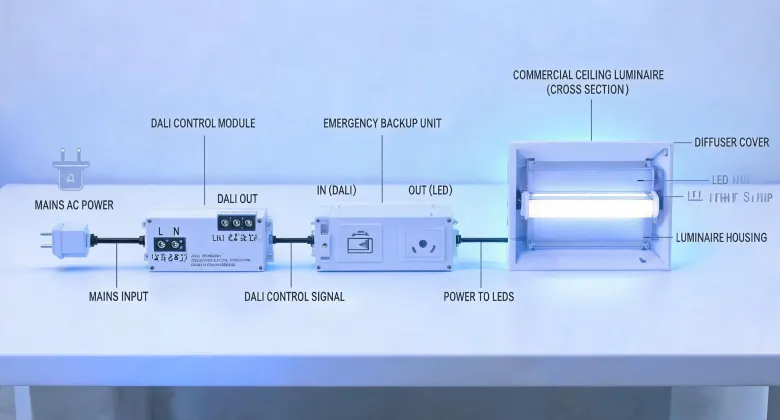
A standalone LED driver fails? You replace the driver or the fixture. A Samsung LED downlight fails? You might replace the module. But the real cost is downtime. With a standalone system, if the 'brain' (like a DALI controller) fails, the network is often down until you get a specialist. With Samsung's hub, the system can 'heal' itself or alert you via the app.
"In Jan 2024, we had a standalone system fail. It took 3 days to find a technician who understood the proprietary controller. The $400 service call was annoying, but the 3 days of lost productivity in the conference room was the real killer."
Conclusion on Cost: On a per-fixture basis, standalone is cheaper. But if you look at the total cost of installation, management, and downtime over 3 years, the Samsung ecosystem starts to make very strong financial sense—especially for larger spaces.
When to Pick Which: The Buyers Guide
Look, I'm not saying Samsung is always the right answer. But my biggest mistake was assuming 'Samsung premium' was marketing fluff. It's not. It's engineering.
- Choose the Samsung Ecosystem if: You control the space (you're building a new office, or leasing a floor). You value brand image and professional ambiance. You have a facilities manager who wants centralized control. Your project is larger than 2,000 sq ft.
- Choose Standalone Fixtures if: You're replacing a single failed light in an old building. You have a tiny 100 sq ft retail booth. You are on a razor-thin budget and cannot absorb the higher upfront premium. You do not care about smart controls or color consistency.
My recommendation? If you're even asking the question, you're likely a candidate for the ecosystem. The $50–$100 difference per fixture isn't a line item; it's an investment in your company's perception.
Pricing is for general reference only as of early 2025. Actual prices vary by vendor, specifications, and time of order. Always verify current rates with an authorized Samsung distributor.