-
Why would a light switch stop working? Usually because something around it changed
-
Start with the switch's environment, not the switch
-
The chandelier that wasn't the problem
-
LED lighting changed the failure pattern
-
Zigbee lighting creates a second layer of switch failure
-
TV prices, old reviews, and the same lesson
-
When replacement is the right move
Why would a light switch stop working? Usually because something around it changed
Why would a light switch stop working? Most of the time, the switch itself isn't the reason. In my emergency coordination work at samsung-led, I've handled roughly 200 urgent lighting and display calls since 2022. Based on our field notes, only about one in four dead-switch jobs actually ended with a new switch. The rest were loose connections, tripped breakers, LED/dimmer compatibility problems, or a Zigbee network that had silently stopped communicating.
I'll be honest: I'm not a licensed electrician. I'm the person who gets the 10 p.m. call from a banquet hall, a restaurant owner, or a property manager. I coordinate the technicians who solve those calls, so I've had a front-row seat to what actually goes wrong.
Start with the switch's environment, not the switch
If a switch stopped working suddenly, the fastest answer is usually to ask what changed. Did the load change? Did a breaker trip? Did someone repaint and push the switch back into a box with tighter wires? Did the LED bulbs get swapped? Is this a Zigbee lighting scene where the network lost a node?
My standard triage order looks like this:
- Check the breaker and reset it properly. AFCI and GFCI breakers can trip internally but still look as if they're on.
- With the circuit off, inspect the wire connections on the switch. Push-in backstab connections loosen more often than screw terminals.
- Check whether the dimmer is marked LED / electronic / low-voltage compatible. A dimmer designed for incandescent bulbs can overheat or fail when paired with LED drivers.
- If it's part of a smart system, check the Zigbee controller and power to nearby mesh nodes. Re-pairing a switch can solve what looks like a dead switch.
That's not a complete electrical inspection. It's a triage list meant to stop people from ordering expensive replacement parts before they know what failed.
The chandelier that wasn't the problem
In March 2024, I got a late-night call about a home chandelier that had stopped working. The homeowner had already found a nice replacement fixture and asked if we could source it within 48 hours. I asked one question first: 'Does the switch feel warm?' It did.
We sent an electrician before sending a sales quote. He found a backstabbed wire on the dimmer terminal. The connection had loosened over time, causing resistance and heat. He moved the wire to the screw terminal, tightened it, and the chandelier fired up. No replacement fixture, no worn out switch. The switch was doing its job; the connection wasn't.
That's more common than you'd think. When a switch is warm, people often assume the switch is overloaded. Sometimes it is. But more often, a loose wire connection is creating resistance and heat.
LED lighting changed the failure pattern
When I first started in this industry, a wall switch controlling a chandelier or ceiling light usually acted as a simple mechanical contact. If it failed, it was because years of use had worn the contacts. That still happens. But LEDs have changed the diagnosis.
Most LED bulbs contain a driver that changes how they draw power. Inrush current is different. Dimming curves are different. A switch that was fine for incandescent bulbs may not be compatible with the way an LED driver starts up. I've seen switches fail after only a few months when they're connected to certain LED drivers; I've also watched the same switch last 20 years on incandescent. It's not always the switch quality.
What was true in 2020 isn't always true in 2025. The fundamentals—good wire connections, correct load ratings, a dedicated neutral where required—are still the same. But the hardware executing those fundamentals has changed. That means an old dimmer and new LED bulbs can make a light switch stop working without either product being defective.
One detail worth noting: some dimmers have a minimum load. If the LEDs swallow so little current that the dimmer can't keep its internal electronics running, it can blink or simply refuse to turn on. In that case, the switch needs to be matched to the fixture load, not replaced with an identical model.
Zigbee lighting creates a second layer of switch failure
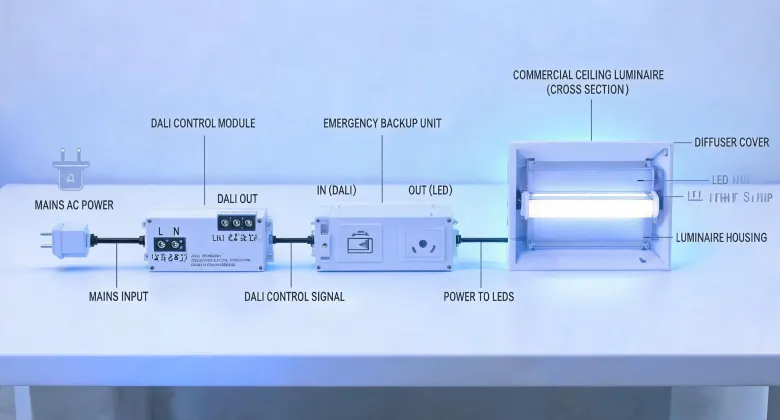
With Zigbee lighting, there's a new possibility: the switch isn't an ordinary switch, and it can fail to speak to the lights even when it has power. This is where online advice gets stale. A standard voltage tester isn't enough.
In January 2025, a restaurant called because Zigbee-controlled sconces in the dining room were all dead. The manager had already ordered a new set of wall switches. We asked if any Zigbee router node had been moved or unplugged. A cleaning crew had unplugged a router in a storage corridor. When we plugged it back in, the mesh reconnected and the switches worked within a few minutes.
I don't have hard data on how many Zigbee support calls are caused by missing router nodes. Anecdotally, it's a lot. If a switch is part of Zigbee lighting, check the network before you call it dead.
Another quieter issue: Zigbee smart switches often require a neutral wire. New construction has one in the switch box; older buildings sometimes don't. If a seller says no neutral required, that can work with incandescent loads, but some LED bulbs leak enough current to make the switch misbehave.
TV prices, old reviews, and the same lesson
Since samsung-led also handles LED displays, the same triage lesson shows up with TVs. A client will call about a dark display and ask if we can match a samsung 42 inch led tv price. In the same conversation, they might mention that a light switch in the room has been acting strange. I treat both as symptoms of unknown origin. The switch might be failed. Or there might be a shared neutral issue, a tripped indoor breaker, or a bad surge protector.
Product research has the same blind spot. I've read samsung f6000f full hd led smart tv reviews when a customer considered using an older display. The reviews tell you about colors, remote, and smart features. They do not tell you whether that specific unit's power supply is stable after years of service. The same goes for a light switch. A part can look perfect on paper and still fail in your specific setup because of connections or compatibility.
That's why I ask for context before quoting a fix. A samsung 42 inch led tv price tag does not include the cost of ignoring a wiring defect. Neither does an old TV review.
When replacement is the right move
I don't want you to leave thinking a switch never fails. If it's hot to the touch, makes crackling sounds, leaves scorch marks, or only works when the toggle is held sideways, replace it. If contacts are pitted or plastic is melted, no amount of wire tightening will fix it. Also, if you feel even slightly unsure, stop and call a licensed electrician. I'm not one. Code requirements vary, so verify with your local building department.
The one-in-four number cuts both ways. It means many replacements are unnecessary. But it also means that if you've already done the triage and the switch is damaged, don't cheap out on a generic part. Match the switch type to the load and installation.
Next time you search for why would a light switch stop working, start with the boring list: breaker, connection, compatibility, network. If you do that first, you might save the switch, the fixture, and the emergency delivery fee.