Most buyers treat LED lighting upgrades like buying light bulbs. That’s your first mistake.
When I took over purchasing for our company in 2020, I thought I knew what I was doing. LED lighting is efficient. LED lighting is affordable. You pick a fixture, you install it, done. That mindset cost us roughly $2,400 in unexpected expenses in the first year alone.
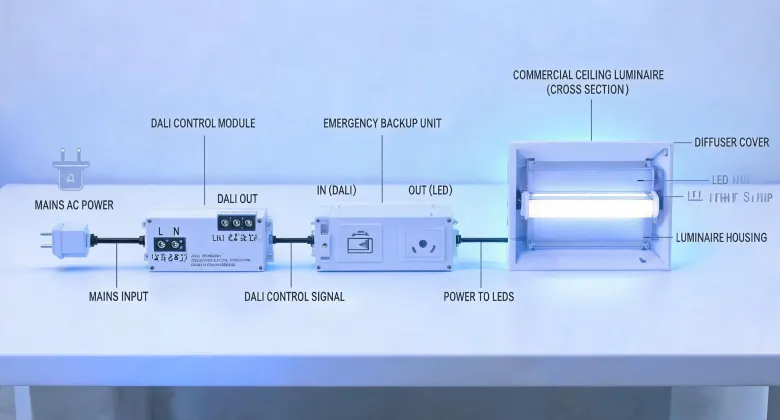
Here’s the thing: LED lighting isn’t just a fixture replacement—it’s a system decision. And most buyers (myself included) approach it like they’re shopping for desk lamps. That’s where the trouble starts.
What most people get wrong
Let me break this down based on what I’ve learned managing about 60-80 lighting orders annually across 8 vendors for our 400-employee office.
1. They focus on the fixture, not the dimmer compatibility
What most people don’t realize is that LED downlights and spotlights don’t always play nice with existing dimmer switches. We installed a set of what we thought were high-end indoor spotlights (samsung-led, naturally) into a conference room. Looked great. Until someone tried to dim them. Flickering, buzzing—the whole works.
The question everyone asks is ‘how bright is it?’ The question they should ask is ‘does this pair with my dimmer system?’ (note to self: always check specs before assuming compatibility). We ended up replacing the dimmer modules—another $400 we hadn’t budgeted for.
2. They underestimate installation complexity
Here’s something vendors won’t tell you: the cost of replacing a light fixture isn’t just the fixture. For a crystal chandelier in a lobby? You’re looking at labor, ceiling reinforcement if it’s heavy, and potentially an electrician’s visit. Our maintenance team could handle basic replacements, but specialty fixtures? That’s a different story.
Most buyers focus on the per-unit price and completely miss that installation can tack on 30-50%. We had a case where a chandelier quote looked amazing—until the vendor mentioned ‘standard installation’ excluded wiring modifications. That cost us another $300 (ugh).
3. They ignore the long-term system implications
When we consolidated lighting for our 3 locations, I decided to go with smart-compatible options. The Samsung LED ecosystem supports Zigbee—which means integration with building management systems. Not everyone needs this, but if you’re planning for future automation (and you should be), the cheap fixture without smart capability locks you into manual control forever.
Most buyers think about today’s problem. The best buyers think about the system they’re building for 3-5 years out.
Okay, but what about the budget buyers?
I can already hear someone saying: ‘That’s fine for premium, but what if we just need something cheap?’ Fair question. In 2024, we tested 4 vendors for budget-friendly indoor spotlights. Price varied by as much as 40% for nearly identical specs (Source: vendor quotes, Q1 2024; verify current pricing). But here’s the catch: the cheapest unit had a 1-year warranty vs. 5 years on the mid-tier. That’s not a fixture decision—that’s a total cost of ownership decision.
Per the International Energy Agency (IEA), LED adoption for commercial spaces in the U.S. reached roughly 50% of total lighting sales by 2023. That means half of the buyers are still making decisions based on outdated assumptions about halogen vs. LED. Don’t be that person.
My take (and I’ll stand by it)
I’d rather spend 10 minutes explaining these nuances than deal with mismatched expectations later. An informed customer asks better questions and makes faster decisions. That’s true whether you’re buying a Samsung 43” 7 Series 4K UHD TV Smart LED with HDR for a conference room, an emergency light for a stairwell, or a grow light for your indoor plants.
Stop trying to find the cheapest fixture. Start understanding the system you’re plugging it into. Your budget (and your electrician) will thank you.