The kickoff meeting was in late January 2024, in a conference room that smelled like fresh paint and sawdust. The project manager leaned back in his chair, tossed a pen onto the table, and said, "What could possibly go wrong with a chandelier swap?" We'd done a hundred of them. We laughed.
That was mistake number one.
By the end of that project, a $4,800 chandelier replacement had cost us just over $18,000 in rework, penalties, and overtime. The fancy Samsung LED display wall we'd obsessed over? Flawless. The routine chandelier? A disaster.
Let me back up.
Who I Am and How I Review
I'm a quality and brand compliance manager for a commercial lighting company. I review every deliverable before it reaches customers—roughly 200+ unique items annually, from LED downlights to display walls. In Q1 2024, I rejected 6% of first deliveries due to spec mismatches. That number sounds small until you calculate what rework actually costs. This is a story about the 6%.
The Project That Seemed Too Easy
In early 2024, we won the contract for a hotel lobby renovation. The scope was simple on paper: replace the old lobby chandelier, install new LED downlights, and set up a Samsung LED display for the reception area. The client also requested smart lighting controls—Zigbee-compatible switches they could manage from their phone or the front desk.
We were confident. Overconfident, as it turned out.
The Samsung LED Wall: Where We Got It Right
For the display, we specified a commercial variant from Samsung's 2021 LED TV lineup. I'll get into the specs in a moment, because they mattered. The lobby had floor-to-ceiling windows on the west side. Glare was going to be brutal during afternoon hours, so the panel needed excellent motion handling. That's where Samsung's LED Clear Motion feature came in—it reduces smearing on fast-moving content, which hotels need for dynamic presentation loops.
We verified everything on that display. Three brightness tests at different times of day. Color temperature calibration against the lobby's lighting plan. We tested with content similar to what the hotel would actually run—not just the demo loop Samsung provided. (And yes, I reviewed our marketing copy against FTC advertising guidelines at ftc.gov. Any claim we made about brightness or color accuracy had to be substantiated with measured data. I vetoed the phrase "blindingly bright" in our proposal. The FTC requires claims to be truthful and substantiated, and we couldn't back up "blindingly.")
The Samsung LED wall passed every check. It arrived on time, mounted cleanly, and the LED Clear Motion made evening presentations look crisp even with the low sun angled through those west windows. The client was thrilled.
The chandelier was the afterthought.
The Chandelier Replacement: Where Everything Fell Apart
The client wanted to replace the lobby chandelier with a modern LED fixture—specifically, a 48-inch model from our catalog with adjustable color temperature. Simple, we thought. We'd shipped this exact fixture to at least six other projects. It was, in our minds, the most routine part of the entire contract.
Here's where the story gets embarrassing.
The install crew arrived on Monday morning. By Tuesday afternoon, they'd hit three separate issues. Each one was discovered only after the old fixture was already down from the ceiling—which meant each issue triggered a separate, expensive fix.
Problem 1: The Smart Light Switch Didn't Get Along with the Fixture
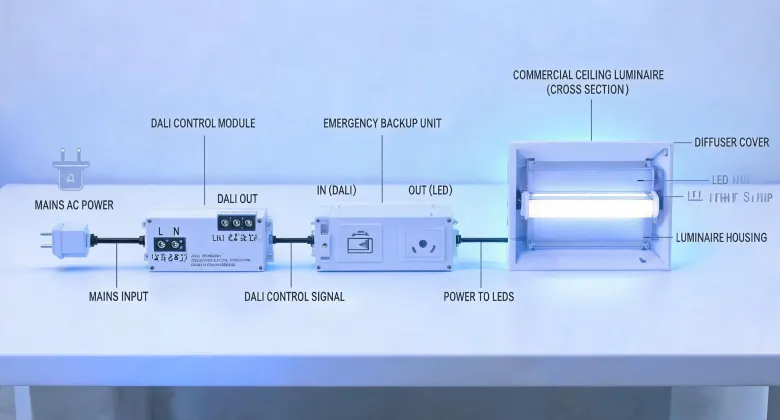
The client's request for "smart light switch" controls wasn't a nice-to-have—it was a requirement. What is a smart light switch, exactly? In practical terms, it's a switch that uses a communication protocol like Zigbee, Z-Wave, or Thread to control lighting remotely, on a schedule, or via voice assistants. The catch: not every LED chandelier is dimmable, and even dimmable LEDs don't always work with smart dimmers. The driver inside the fixture has to be compatible with the switch's protocol.
Ours wasn't.
The chandelier we'd shipped had a driver that didn't communicate with the Zigbee dimmer. At 30% brightness, it pulsed. Not ideal, but workable? No. Not workable. The crew tried three different dimmer configurations before calling me.
Problem 2: The Color Temperature Was Wrong
Once the dimming issue was partially sorted, a different problem surfaced. The chandelier's color temperature didn't match the other lobby fixtures. The spec sheet said 3000K—warm, inviting, correct for a space with wood paneling and brass accents. The unit on site was running closer to 4000K. Cold. Clinical. The client noticed within seconds of the first test.
Turns out, the driver had been misconfigured at the factory. The LEDs themselves were fine; the module was just set to the wrong color temperature. A 5-minute check in our warehouse—setting the fixture to full brightness, reading the output with a spectrometer—would have caught it. Instead, we caught it with the client standing ten feet away, on day three of the install. (Ugh.)
Problem 3: The Old Chandelier and the Cleaners
The third issue didn't come from the new fixture. It came from the old one—and from a conversation we should have had earlier.
The client had originally asked whether they could skip the replacement entirely and restore the original chandelier instead. They'd already found chandelier cleaners who specialized in antique fixtures. The cleaners quoted $1,200 to disassemble, clean, rewire, and reinstall the original. Our replacement was $4,800.
The client spent a week deliberating. They ultimately chose replacement, but that week of indecision delayed our schedule. And the old chandelier, sitting in a non-climate-controlled storage closet, sustained moisture damage. By the time the client made the call to replace, the old fixture was beyond saving. We didn't have to worry about restoring it anymore—but we also lost the option, which meant our proposal was now the only game in town. (Not a great position to be in, ethically or contractually.)
In hindsight, restoration was probably the smarter recommendation. A properly cleaned and rewired antique chandelier would have given the client the warm, character-rich look they actually liked—at a lower price. But we were already biased toward the replacement, because that's what we sell. We should have presented both options with real numbers from the start. Prevention isn't just about checking specifications; it's about checking assumptions.
The Cost of Not Checking
Here's the full breakdown:
- New LED chandelier: $4,800
- Rework labor for the dimming issue: $3,200
- Expedited replacement driver (color temperature fix): $1,100
- Storage damage settlement for the old chandelier: $1,500
- Schedule delay penalty (10 days): $2,900
- Crew overtime to finish before the hotel's reopening: $4,500
Total: just over $18,000. All avoidable.
The Samsung LED display wall? Zero issues. The Zigbee smart switches? Functioned perfectly once paired with a compatible driver. The LED downlights? Zero issues.
What's not obvious, and what I want you to actually take away from this story, is that the "easy" part was the one that destroyed us. The conventional wisdom in lighting is to spend your quality control budget on complex systems—the displays, the smart controls, the emergency lighting. That's where the specifications are dense and the stakes feel high. It makes sense on paper.
In practice, my experience suggests the opposite is often true. The familiar, repetitive items are the ones where we take shortcuts. We stop measuring. We start assuming. And that's exactly when things go sideways.
The Checklist I Use Now
I implemented a 12-point verification protocol after this project. The specific checks that came out of this failure are worth naming:
- Verify driver/dimmer compatibility before ordering. A 10-minute call to the driver manufacturer can prevent a $3,200 on-site fix. We now do this for every dimmable fixture that pairs with a smart switch.
- Confirm color temperature at the factory. We ask for a photo of the actual unit's configuration screen before it ships. If the vendor can't provide that, we test the first unit to arrive before scheduling the install.
- For anything labeled "smart," identify the exact protocol. Zigbee, Z-Wave, Thread, Wi-Fi—they are not interchangeable. Your fixture's driver has to match the switch's protocol, and "it should work" is not a technical spec.
- Store client-owned fixtures properly. Non-climate-controlled storage ruined a $1,500 antique chandelier and turned a reversible decision into a forced one.
- Talk through restoration vs. replacement before touching anything. With real numbers. Both sets of numbers.
5 minutes of verification beats 5 days of correction. I used to think that was a slogan. Now I know it's a math problem.
That project, more than any other I've reviewed in four years, is the reason I now insist on testing "simple" fixtures the same way I test complex ones. The embarrassment was real; the cost was real; the lesson stuck.
The Limits of What I Can Tell You
My experience is based on about 200 mid-range commercial projects over four years, mostly in hospitality and office spaces. If you're working in luxury residential or ultra-budget segments, your risk points are probably different. Also, the smart lighting landscape is moving fast—the Zigbee compatibility issues we hit in 2024 are already different from what you'll encounter with newer protocols. Verify current standards before relying on anything I've described here.
Final Takeaway
The "easy" parts of a project are where the money disappears. The Samsung LED display wall with LED Clear Motion was the centerpiece of that lobby—and it was flawless because we respected it enough to verify everything. The chandelier replacement was the routine afterthought—and it cost us $18,000.
Prevention isn't just better than cure. In this business, it's what keeps the margin in the contract.