I spend my days reviewing products before they ship. Displays. Luminaires. Power supplies. In Q1 2024, I rejected 18% of our first deliveries from three new vendors because the color was visibly off. So yes, I read specs. But I also check the things that aren't on the spec sheet.
People often ask me whether they should buy a Samsung LED TV or a set of professional LED spotlights. They assume 'Samsung LED' means one technology. It's more honest to say that Samsung LED is a brand standard and a family of components. In a TV, the LED is the backlight. In a luminaire, the LED is the light itself.
Let's compare them the way I'd compare them for a real purchase: color accuracy, build quality, spec honesty, and where to buy. If you're shopping for either, this is the checklist I'd run before sending a PO.
Color: The Most Trusted Spec Is the One Most Easily Faked
Start with a simple fact. A 32 in Samsung LED TV is actually an LCD panel with an LED backlight. The image processing is what makes the picture look good. So when I evaluate a TV for a commercial installation, I don't trust the vivid demo mode. I run a calibration check and look at the delta E number. Delta E measures the difference between the color you want and the color the display produces. According to Pantone color management guidelines, a delta E under 2 is acceptable for brand-critical colors. Above 4? Visible to most people.
On the lighting side, the same color science applies, but the scale is different. Luminaires get rated with CRI, R9, and SDCM. A pro spotlight might claim CRI 90, but R9 tells you how it handles deep reds. If you're using a red spotlight for theater, art, or a retail accent wall, R9 and the dominant wavelength matter more than the average CRI. Red is not just red. It can be either a saturated red LED with a narrow spectrum or a phosphor-converted LED that looks orange-pink.
Honestly, I've had a client approve red lighting on screen, then reject the physical sample because it looked like it came from a different planet. The vendor said it was within tolerance. I sent it back. That decision cost about three weeks and a change order. But it's better than accepting a full batch.
People think that if you install premium Samsung LED chips, the color accuracy is guaranteed. Actually, color accuracy is determined by binning, driver current, optics, and thermal management. The chip is only the beginning.
Build Quality: The Fastest Way to Estimate Lifespan
Look at the enclosure. Touch it. Weigh it. A cheap display flexes at the corners. A cheap downlight feels hollow. During our Q1 2024 audit, we opened 25 LED downlights from three different factories. On paper, they were all identical: 15W, 3000K, CRI90. In practice, two of them had drivers with poor thermal bonding. After 48 hours in our temperature chamber, you could smell the overheating.
A Samsung 46 inch LED TV with a plastic bezel and thin back cover is fine for a meeting room. If the same TV runs 24/7 as digital signage, choose the commercial variant even if it has the same resolution. The one with a metal back plate and better ventilation is the one that won't die in month 13.
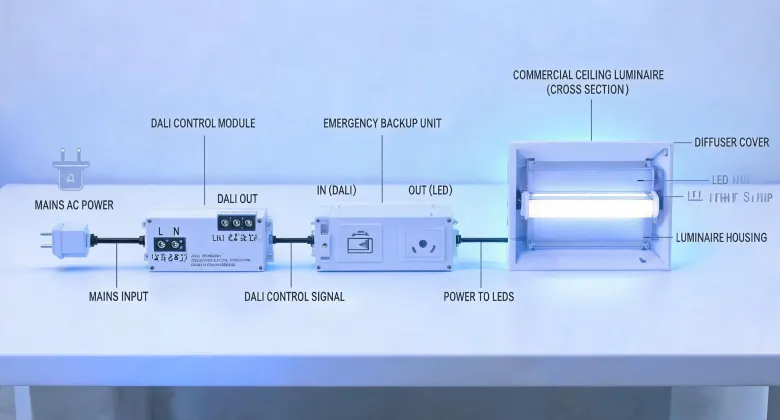
For lighting, ask for the IP rating and impact rating. A professional spotlight for a warehouse or a shop front deserves a die-cast aluminum housing. A budget plastic fixture might be fine for a dry indoor ceiling, but it can sag or yellow. Not ideal. Test a sample before you commit to a full batch.
Specs: If It Sounds Too Good, Ask for the Report
The LED lasts 50,000 hours myth was true when early LEDs were massively overbuilt and run at low current. Today, the LED chip may last, but the driver and capacitors often fail first. So when a supplier throws out a lifespan number, ask for the LM-80 test report and the driver warranty. If they don't have one, treat the claim as marketing.
Same goes for brightness. Some low-cost downlights advertise 120 lumens per watt. The real number can be 30% lower once you measure the complete luminaire with driver losses and optical losses. This isn't new. But when someone searches for where to buy recessed lighting, the cheapest online listing usually has the most creative spreadsheet.
The word LED itself is not a guarantee. A 32-inch Samsung LED TV is a legitimate product, but it is an LED-backlit LCD, not an emissive LED display. The same precision matters in lighting. A pro spotlight from an unknown seller is not pro just because the title says so. Verify the photometric file, the CCT tolerance, and the certification.
Where to Buy Recessed Lighting and Commercial Displays
Let me give you the honest answer to where to buy recessed lighting. It depends on the risk you can carry.
- Online marketplace: Good for small quantities, samples, and urgent replacements. Risk: counterfeit certificates, unclear returns, inconsistent specs.
- Electrical wholesale distributor: Usually the right choice for commercial projects. You get reliable stock, a contact to call when something fails, and a better chance of batch consistency.
- Manufacturer direct: If you are specifying a large project, go direct or through the manufacturer rep. They can provide photometric files, dimming compatibility, and warranty support in writing.
In 2024, I had 48 hours to source recessed fixtures for a retail renovation. Normal process: request samples, review photometrics, compare prices. There was no time. I called a distributor I have used before and paid around 12% more than the lowest online quote. It showed up on schedule and worked. In hindsight, I should have ordered earlier. But with the contractor waiting, that was the right call.
For Samsung LED displays, do the same. Buying a 32-inch Samsung LED TV from a local retailer is fine for a break room. For a commercial installation, buy through a certified commercial reseller. They can match the model to the usage, handle the extended warranty, and do not disappear after the sale.
Pricing is always in flux. Based on supplier quotes I have seen recently, a 32-inch Samsung LED TV runs roughly $180-$250, a Samsung 46 inch LED TV around $450-$600, and a quality pro spotlight fixture $50-$160 depending on CRI, wattage, and controls. Verify these numbers before you budget; they are reference points, not quotes. (Source: supplier quotes, early 2025)
What Should You Choose?
Use the tool for the job.
If you need digital signage: buy a commercial-grade Samsung LED display. A 32 inch or 46 inch screen is enough for menus, lobby messages, or meeting room displays. Ask about burn-in warranty and networking.
If you need accent lighting: choose a pro spotlight with high CRI/R9 and the right beam angle. White or red, the spectrum matters. Do not buy based on a photo.
If you need general commercial lighting: go for recessed downlights from a proper electrical distributor, not the most aggressive online listing. Check the certification, the SDCM rating, and the driver brand.
If you need a vendor to do both lighting and displays: ask them what they are not good at. A specialist who knows their limits is more useful than a generalist who promises everything. I would rather hear 'this is not our strength, but here is who we would call' than receive a package that was never actually tested together.
Bottom line? Buy from someone who can show you the evidence. Specs are the start, not the ending. And no, I do not think every product has to be perfect. But it has to be honest. That is the standard I will keep using.