If you're buying lighting for a business, skip the budget options and start with Samsung LED. It sounds like a bold claim, but after managing procurement for a 400-person company across three locations for five years, I can tell you that the total cost of ownership—not the upfront price—is what matters.
Here's the thing: I've processed around 200 orders for lighting alone. Maybe 180. I'd have to check the system. But the pattern is crystal clear. Cheap fixtures cost you more in replacements, energy, and frustration. Samsung LED, in my experience, is the sweet spot between reliability and cost.
To be fair, I get why people go for the lowest quote. Budgets are real. I've been there. But the hidden costs add up fast. Let me walk you through what I've learned, from downlights to chandeliers to the weird question about office plants.
My Core Takeaway: Total Value Over Price
In my first year, I made the classic rookie mistake: I prioritized the lowest unit price for our downlight wall fixtures. I found a vendor offering a 30% discount over our usual supplier. Ordered 200 units. The savings looked great on paper. Problem was, 60 units failed within 18 months. The reinstallation cost alone ate up the savings. The vendor didn't honor the warranty—turns out, they didn't have a proper invoicing system (a handwritten receipt doesn't cut it with finance). I ended up eating a $1,200 redo out of my department budget.
Since then, my rule has been simple: calculate total cost of ownership, not just the sticker price. That includes:
- Base product price
- Shipping and handling
- Installation labor
- Expected lifespan and replacement frequency
- Energy consumption over time
- Warranty support
In my opinion, this is where Samsung LED shines. Their downlights and spotlights I've installed tend to last longer with consistent color temperature. The initial investment is higher, but the replacement intervals are longer. For a facility manager or administrative buyer, that predictability is gold.
Navigating the 'Samsung LED' Brand in Commercial Settings
When I hear 'Samsung LED,' I think of two things: the lighting fixtures and the LED displays. In our office, we've used both.
Lighting: Downlights, Spotlights, and Emergency Lights
For our downlight wall installations in conference rooms and hallways, Samsung's downlights offered a clean, uniform light that didn't flicker. I've had issues with cheaper downlights that produced a noticeable hum or color shift after a year. The Samsung units? Consistent, even after three years in our main lobby.
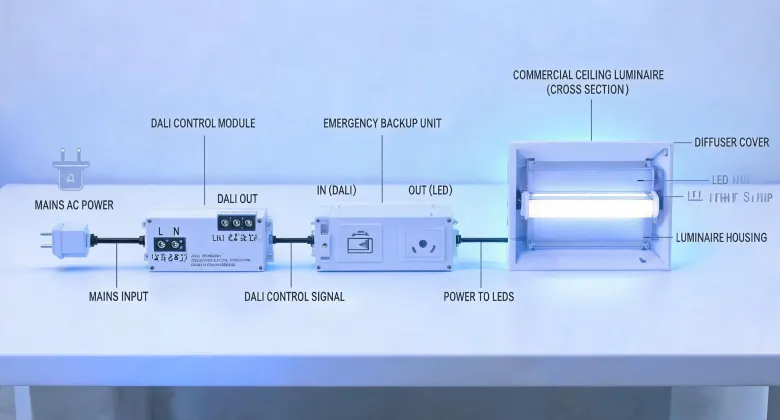
I went back and forth between Samsung and another reputable brand for our emergency lights. Samsung had a slightly longer warranty (5 years vs. 3), but the competitor was 15% cheaper. Normally, I'd get multiple quotes and run a cost analysis. But with a code compliance deadline looming, I had 48 hours to decide. I went with Samsung based on our existing positive experience with their downlights. In hindsight, I should have pushed back on the timeline, but the decision worked out.
Displays: The 'Samsung 4K Ultra HD LED Smart TV' Question
We also needed a large display for our main lobby. A colleague asked me to check 'samsung 4k ultra hd led smart tv reviews.' The reviews were good, but for a commercial setting, I learned that 'consumer' models differ from 'commercial' ones. Commercial displays often have better burn-in protection, higher brightness for bright rooms, and simplified management software. If you're buying for a lobby or conference room, look at their business display line, not just the smart TV. I made the mistake of not differentiating this early on, which caused a slight brightness issue in our sunlit lobby.
A Surprising Find: The Onyx Chandelier
One of my more interesting projects was sourcing an Onyx chandelier for our executive suite. This wasn't a standard item for me. I usually order downlights and spotlights. The chandelier was a specific aesthetic request, and the budget was generous.
The first vendor I found offered a beautiful design at a very competitive price. But when I asked for detailed specs on the LED module and driver, they couldn't provide a clear answer. The second vendor, who carried an Onyx chandelier with Samsung LED chips, gave me a complete spec sheet, a clear warranty, and even a sample of the light output. Price was 20% higher. But the peace of mind—knowing the light quality would remain consistent—was worth it. The installation went smoothly, and the executive team was thrilled. That single project reinforced my belief in value over price.
The Plants Question: Can Plants Grow in Office Fluorescent Light?
This is a question I get surprisingly often. A colleague once asked me, 'Can plants grow in office fluorescent light?' The short answer from my experience: not really, not for longer periods.
Most office fluorescents are not full-spectrum. Plants need specific wavelengths in the red and blue spectrum for photosynthesis and growth. Standard office lights (even many LEDs) are optimized for human vision, not plant growth. We tried for a while with pothos and snake plants (which are tolerant), but they didn't thrive. They survived, but that's about it.
For actual growth, you need dedicated grow lights. I later sourced a Samsung LED grow light for a small indoor garden project in our breakroom. The difference was night and day. The plants actually got bushier and greener. So, if you're an office manager or facility manager thinking about office greenery, invest in a proper grow light, not just any LED. The color spectrum matters.
My Recommendations for Different Needs
Based on my experience, here's my personal breakdown:
- For general office downlight/spotlight needs: Samsung LED downlights. They're reliable and consistent. The 'samsung f series led strip' is also worth considering for linear accent lighting. I've used similar strips for cove lighting, and they provided a clean, even glow.
- For a statement piece like an Onyx chandelier: Look for models that use high-quality LED modules (Samsung LEDs are a good sign). Verify the warranty and color rendering index (CRI). A CRI of 90+ matters for spaces where color accuracy is important.
- For plant growth in the office: Don't expect standard office lights to work. Look for 'Samsung LED grow light' products that specify the spectrum. They're an investment, but they actually work.
- For commercial displays: Differentiate between consumer and commercial models. Samsung's business displays are better suited for 24/7 operation and bright lobbies.
To be fair, there are cases where cheaper options work. If you're quickly renovating a low-use storage room or need fixtures for a temporary project, the budget option might be fine. But for high-use areas like lobbies, conference rooms, and hallways—where failures cause disruption and reinstallation costs—it's worth the investment.
That said, my experience is limited to medium-sized commercial spaces. For large-scale industrial projects or retail chains, I'd recommend getting a facility management consultant. But for a typical office, my approach has worked well.
In the end, the right choice depends on your priorities. If you need to minimize upfront cost and can tolerate higher maintenance, go cheap. If you value reliability, predictable costs, and fewer headaches over the long term, consider starting with Samsung LED. Personally, after the $1,200 lesson, I choose reliability.