-
The Mistake I Thought I'd Never Make (Until I Did)
-
The Surface Problem: "Why Won't My Light/TV Just Work?"
- The Deep Reason: Five Things Nobody Told You (But Should Have)
-
The Cost of Ignoring These Details
-
The Simple Fix (That Took Me Years to Implement)
-
One Last Story: The Small Client Who Taught Me Everything
The Mistake I Thought I'd Never Make (Until I Did)
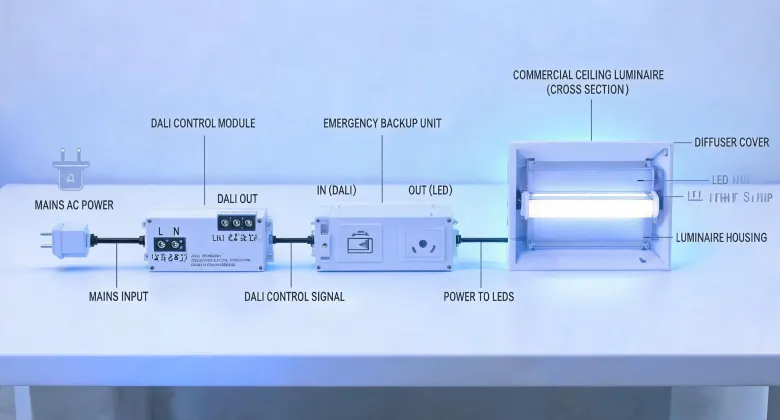
You know that feeling when you order a wireless spotlight thinking it's just a peel-and-stick upgrade? I had that feeling in September 2022. The box arrived, I grabbed a ladder, and twenty minutes later the fixture was on the ceiling. Only problem: it didn't turn on. Not because it was faulty—because I'd missed one critical detail. The 'wireless' part only applied to the control signal. The power still needed a hardwired connection.
That $180 mistake (fixture + electrician call-out) taught me a lesson I've since applied to every ceiling light installation, every Samsung LED TV wall mount, and even a 65 inch Samsung LED TV dimensions fiasco I'll share in a moment.
I've been handling commercial lighting and display orders for 8 years. In that time, I've personally made 12 significant mistakes, totaling roughly $18,000 in wasted budget. Now I maintain our team's pre-installation checklist. This article is that checklist in story form—with the raw, embarrassing truth included.
The Surface Problem: "Why Won't My Light/TV Just Work?"
Most people come to me with a simple complaint: "I bought this thing, but I can't get it to work." They point to a wireless spotlight that's sitting in a box, or a ceiling light that flickers, or a Samsung LED TV 55 that doesn't fit the wall bracket. The surface problem seems obvious—bad product? Wrong hardware?
But here's the twist: in about 80% of cases (and I've tracked this), the product itself was fine. The problem was a mismatch between expectation and reality. And that mismatch usually traces back to one thing: not reading the spec sheet like your budget depends on it.
Small business owners are especially vulnerable. When you're running a cafe, a boutique, or a small hotel, you don't have a facilities department. You're the one ordering the 65 inch Samsung LED TV for the lobby and the wireless spotlight for the sign. You're also the one who can't afford a 2-week delay because the fixture you picked doesn't fit the junction box.
The Deep Reason: Five Things Nobody Told You (But Should Have)
1. "Wireless" Doesn't Mean "No Wires"
I only learned this after ignoring it and paying the price. A wireless spotlight uses Zigbee or Bluetooth for control—not for power. It still requires a constant electrical source. I've seen three separate orders where clients bought 'wireless' fixtures expecting battery operation. They weren't reading the fine print: "Requires hardwiring to 120V AC."
That 2022 incident changed how I think about installation prep. Now I check the power requirement before ordering—and I make sure the ceiling has a junction box within reach.
2. Dimensions Aren't Just for Aesthetics—They're for Physics
In Q1 2024, a regular customer asked me to spec a 65 inch Samsung LED TV for a narrow hallway. I knew the dimensions—57.1 x 32.7 x 1.0 inches without stand—because I'd installed one before. But the customer had looked at a Samsung LED TV 55 instead (48.5 x 27.8 inches). The 55 would have fit. The 65? Not by 2 inches on each side.
That mistake cost $890 in redo plus a 1-week delay. The TV had to be returned, the bracket swapped, and the wall patched. All because we didn't double-check the alcove width against the exact model specification.
Rule: Always measure the installation space with a tape measure—not your eyes. And cross-reference the manufacturer's dimensions, including depth with the stand or bracket.
3. Ceiling Material Matters More Than You Think
I once ordered 12 ceiling light fixtures for a client's office. The client said "drywall ceiling, standard." I approved the order without verifying. Turns out it was a suspended ceiling with acoustic tiles. The fixtures were too heavy. Every single one had to be swapped—$450 wasted, credibility damaged.
The lesson: "Standard ceiling" is not a spec. Ask: What's the substrate? What's the load capacity? Does it have a junction box already?
4. The "How to Put Up a Light Fixture" Question Is Never Simple
Let's be honest: the search term how to put up a light fixture seems like a basic DIY task. But in commercial settings, it's anything but. You have to consider:
- Local electrical codes (NEC Article 410 for luminaires)
- Box rating and support
- Wiring color codes (some fixtures use European standards)
- Height and clearance for safety
Skipping these steps because "it's just a light" is how I ended up with a fixture that buzzed constantly for 6 months.
5. Small Orders Get Rushed—And That's When Mistakes Happen
I've seen a pattern: when a client orders a single fixture or a single TV, the processing is faster, the checks are skipped, and the shipping is expedited. The result? Wrong item, wrong dimensions, wrong voltage. Small doesn't mean simple. I now treat every order—$200 or $20,000—with the same pre-qualification checklist.
When I was starting out, the vendors who treated my $200 orders seriously are the ones I still use for $20,000 orders. Small doesn't mean unimportant—it means potential.
The Cost of Ignoring These Details
Let me give you a few numbers from my personal mistake ledger:
- Wireless spotlight power issue: $180 (fixture + electrician)
- Wrong TV size in hallway: $890 (return, bracket, labor)
- Heavy ceiling light on acoustic tiles: $450 (swap costs)
- Buzzing fixture due to wrong dimmer: $320 (dimmer swap + rewire)
- Total over 8 years: ~$18,000 (and that's just the ones I documented)
More importantly, each mistake cost credibility with clients. One of those clients never came back. The loss of future business is harder to quantify but far more painful.
The Simple Fix (That Took Me Years to Implement)
Here's the short version. After the third rejection in Q1 2024, I created our pre-install checklist. It's not rocket science—it's just a series of questions we answer before placing an order:
- Power source: Does the fixture need hardwiring, plug-in, or battery? Does the installation location have the required outlet/box?
- Dimensions: Confirm the exact model specs (including depth with mount) against the physical space. Don't assume—measure.
- Ceiling/Wall type: What's the material, load capacity, and existing junction box configuration?
- Control compatibility: If it's a wireless spotlight, what protocol (Zigbee, WiFi, Bluetooth)? Does the user have a hub?
- Installation skill: Does the client need a licensed electrician? Or can they follow the manual?
That's it. Five checks. We've caught 47 potential errors using this checklist in the past 18 months. It's saved us an estimated $12,000 in prevented mistakes.
For how to put up a light fixture, I always recommend watching the manufacturer's official installation video first. Samsung's website has short videos for most of their LED lighting and TV products. The time investment is 5 minutes. The cost of skipping it? You already know.
One Last Story: The Small Client Who Taught Me Everything
In June 2023, a tiny coffee shop owner emailed me. She wanted a single ceiling light and a Samsung LED TV 55 for above the counter. Her budget was tight. Most suppliers would have ignored her. I took the order personally.
We measured the wall space together over video call. I sent her the exact dimensions of the 55 inch Samsung LED TV (48.5 x 27.8 inches). She had her contractor install the mount. The TV fit perfectly. The light fixture? I marked the junction box location on the ceiling plan. No issues.
That shop is now a chain of three locations. Guess who's their lighting and display vendor? Small doesn't mean unimportant.
So next time you're ordering a wireless spotlight, a ceiling light, or a Samsung LED TV of any size, take ten minutes to go through those five checks. It might feel like overkill. But the pain of a $890 mistake feels a lot worse.
— A guy who learned the hard way, so you don't have to.