In my opinion, most commercial lighting projects fail before a single fixture gets mounted. Not because the products are defective—but because the planning starts from the wrong question. Buyers obsess over the lowest price per unit and completely miss the cost of the mistakes that pricing creates down the line. If you're planning recessed lighting for a hotel, retail space, or office, the cheapest indoor spotlight you can find is almost never your cheapest path to a finished project.
I've been coordinating lighting and display installations for over eight years, and I've handled more than 200 rush orders in that time—including way too many Friday-night emergencies where a client needed a space re-lit before a Monday event. When you're triaging a project that has to be perfect by the weekend, you learn fast about what actually causes failures. In my experience, it's rarely the expensive components that betray you. It's the "bargain" ones.
The Mirror Chandelier Problem
Here's a scenario that plays out more often than you'd think. A boutique hotel invests in a stunning mirror chandelier for the lobby—one of those statement pieces that instantly defines the entire space. Then, to bring the budget back down, they fill the rest of the ceiling with the cheapest indoor spotlights they can find. It looks like a reasonable compromise on paper.
The reality is different. The chandelier's warm, layered light clashes with the spotlights' cold, flat output. Guests notice the inconsistency even if they can't articulate it. The lobby feels disjointed, and the client ends up calling us back to rework the spotlight layout—which means patching drywall, re-running wires, and paying double for labor.
I still kick myself for not making this argument more forcefully in a 2023 project. We saved the client about $300 on budget spotlights. The rework cost them $2,800 and five days of disruption—or rather, we invoiced $2,800; the real cost was probably closer to double that once you count their lost booking revenue. If I'd pushed harder for a system approach, we'd have avoided the whole mess.
So here's my view: a mirror chandelier and accent spotlights aren't separate purchases. They're one lighting scene. Color temperature, color rendering, beam angle—all of it has to align. That's not a luxury detail; it's the core job.
"The cheapest component is often the most expensive decision you'll make."
What Most Buyers Miss About Recessed Lighting
When a client asks me how to plan recessed lighting, the first thing they usually want to know is which fixture model to buy. That's natural, but it skips a step. The layout is the real decision; the fixture is just the tool that executes it.
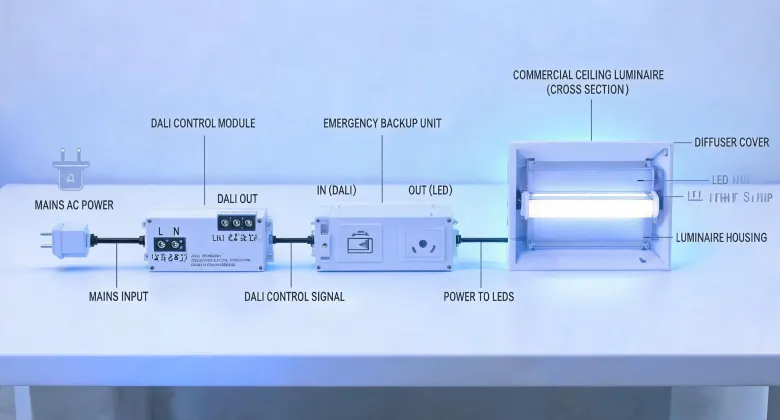
Most buyers focus on lumens and per-unit pricing and completely miss the spacing ratios, trim types, and dimming compatibility that determine whether the room actually works. A recessed light spaced too far apart leaves dark pools between fixtures. Too close together, and you get harsh overlapping hot spots. The trim changes the beam's personality—a baffle trim gives you a completely different feel from an adjustable gimbal. And if you want to change scenes later, you need dimmable drivers. That's where Zigbee-compatible fixtures become worth the premium.
For a typical commercial space, the planning phase takes me a day or two. Compare that with the cost of cutting into finished ceilings because the layout was wrong. I learned this in 2021, when a retail client skipped layout review and approved the cheapest quote on a 40-fixture recessed lighting package. The fixtures were fine individually. The layout simply wasn't designed around their display walls. We spent four days moving eight fixtures and replacing two drivers. The change order was higher than the original savings.
A few things I'd tell any buyer who asks me how to plan recessed lighting: take the ceiling grid seriously, account for columns and beam pockets, think about which direction the seating faces, and plan your lighting zones around functions—not around a fixture catalog. And honestly? Leave room for flexibility. Smart controls cost a little more upfront and save you a lot of retrofit pain later.
The Display Nobody Accounted For
This is the angle that surprises most people—or rather, the one that surprises almost everyone until I point it out. Commercial spaces today have two visual systems competing for attention: the lighting and the displays. That Samsung LED TV series 6 in the waiting area? The Samsung LED 40 Smart TV behind the reception desk? They're part of the visual field, whether you plan for them or not.
And here's the issue: poorly planned spotlights can wreck an expensive display. Glare on a screen makes content unreadable. Reflective fixtures turn a premium panel into a smeared mirror. I've lost count of how many times a client complained about a TV "looking washed out" when the real culprit was a $25 spotlight aimed straight at the glass.
People assume displays and lighting are separate systems. What they don't see is that both live in the same visual field. The best commercial installations I've worked on treat them as one integrated environment. That's where the Samsung LED ecosystem approach genuinely wins. When you plan the lighting and the display together, you control for glare, color balance, and viewing comfort from day one—instead of discovering the problem after install. At samsung-led, we carry both the lighting fixtures and the Samsung LED display line, so we get to see this integration problem from both sides.
Don't hold me to this as a formal statistic, but in the last couple of years, every project where lighting and display were planned as a package sailed through the punch list. The ones where they weren't? They had callbacks. Almost every time. At least, that's been my experience with commercial hospitality and retail projects.
"But the Cheap Quote..."
I can already hear the purchasing manager's objection: "If I go with the discount supplier, I'm saving 30% on fixtures." Okay. And the invoice looks better on day one. But total cost of ownership tells a different story.
Here's how the math tends to add up:
- The lower price looks great... until standard shipping turns into a two-week lead time and you're paying rush fees.
- Those basic drivers? They're not dimmable, and they won't connect to the Zigbee controls you'll likely want next year.
- Warranty support is a gamble. We've seen discount vendors disappear when three drivers fail at month 14.
- And if the layout from the cheap quote is wrong, every change order lands on your side of the ledger.
That's not speculation. Our company now requires a 48-hour buffer before any event-date delivery, and we put that policy in place after a 2022 incident where a discount vendor's "guaranteed" shipment arrived defective. The rush replacement cost us an extra $800 in freight—on top of a $12,000 project. The $750 we saved on fixtures was gone in one failed delivery. Then again, we got lucky that the event was still saveable. The client could have lost their entire placement.
Another objection: "Smart lighting is overkill. We just need light." Fair enough—but the price gap between a basic dimmer and a Zigbee-compatible driver is fairly small, and the flexibility gap is huge. Scheduling, scene changes, daylight harvesting, integration with building systems. And if you're already installing Samsung LED displays, you're in an environment that rewards connected infrastructure.
The Bottom Line
This was accurate as of early 2025. The lighting market moves fast, so verify current pricing and product availability before you finalize a budget.
If I were planning a commercial space tomorrow—mirror chandelier as the statement piece, indoor spotlights for accent, recessed downlights for base coverage, and a Samsung LED display as the information anchor—I'd design the lighting around the displays and the architecture together. I'd specify consistent color temperatures across every fixture. I'd choose dimmable, Zigbee-compatible drivers. And I'd pay a fair price for fixtures I can trust, because a rework cycle will blow right past whatever I saved on the bill.
The way I see it, the cheapest quote is only cheap on paper. The real cost shows up later—in change orders, missed deadlines, and lighting that makes everything else look worse. Plan the system. Design the experience. The value will follow.